Trialing
Designing a tool to help physicians find the best clinical trial for their patients.
Context
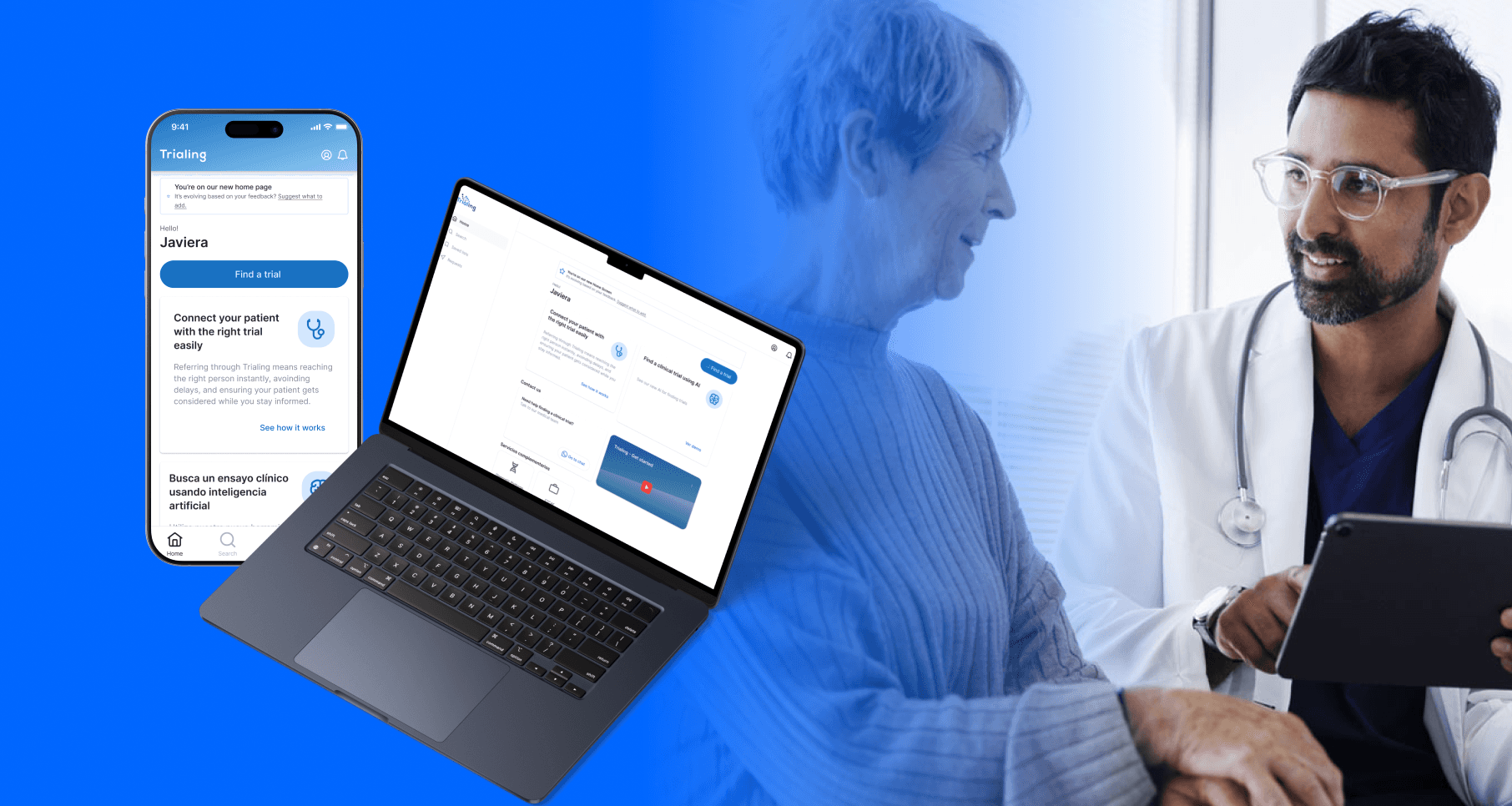
The time it takes to find an adequate clinical trial for an oncological patient depends on the outreach capacities of each individual physician.
Trialing helps physicians all across Europe and the US find the most suitable trial in a couple of minutes.
Team: Directly reporting to Product engineering, Collaborating with Growth, Marketing, and Clinical & Medical operations.
My role: Product Design Lead & Researcher
Tools: Figma, Webflow, Prototyping, UI Design, User Research, Data Analysis and Process mapping techniques
Challenge
Trialing is a tool that curates data related to clinical trials for physicians, so they can make better decisions when referring a patient. This process relies heavily on the network of colleagues that each physician has, which leads to high chances of not finding the most accurate trial for each specific case. Only by building trust in the network of physicians and hospitals, Trialing will achieve a behavioral change in users and help the platform grow.
Physicians without a proper network of colleagues or far away from highly urban areas, can take up to…
1 month
Approach
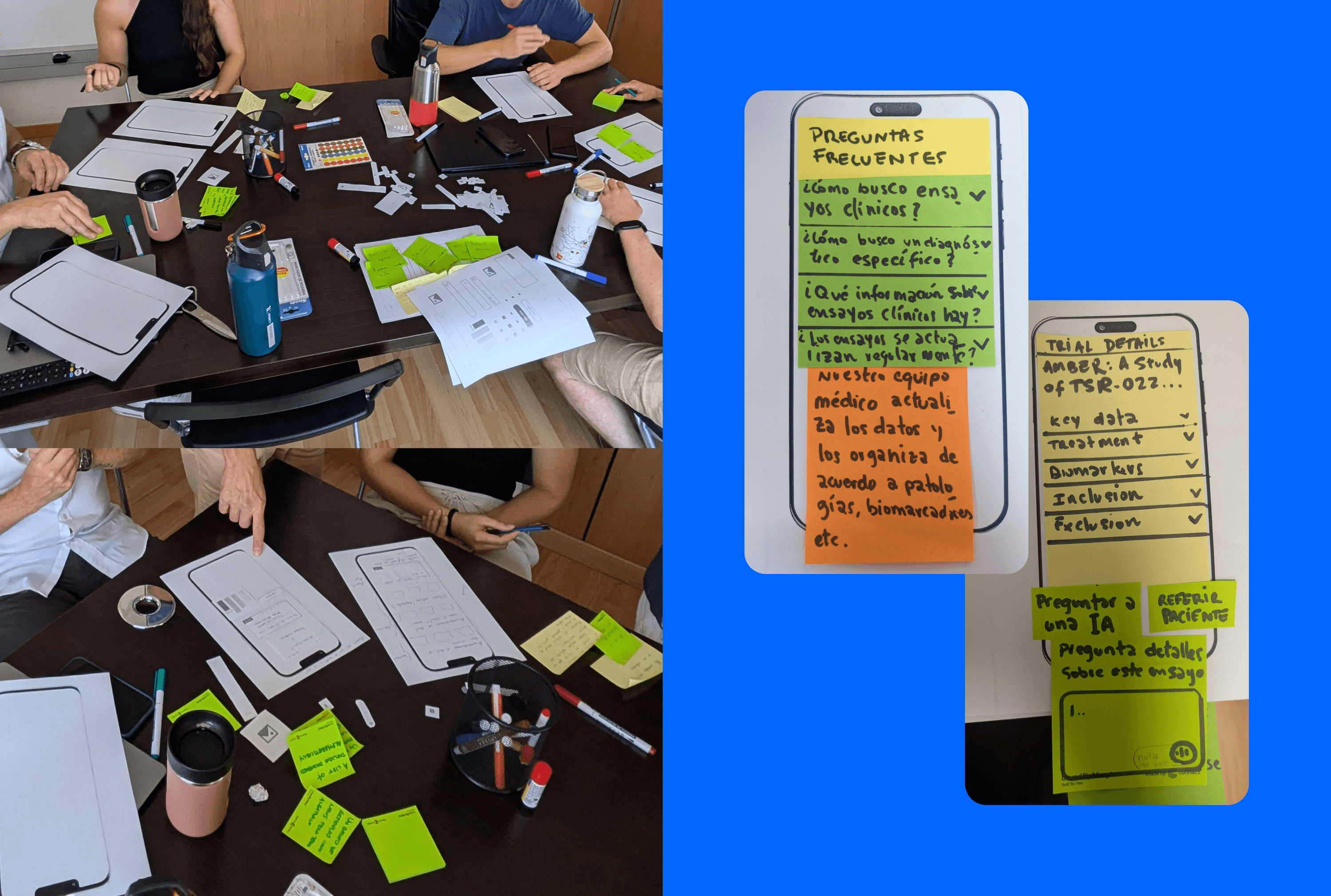
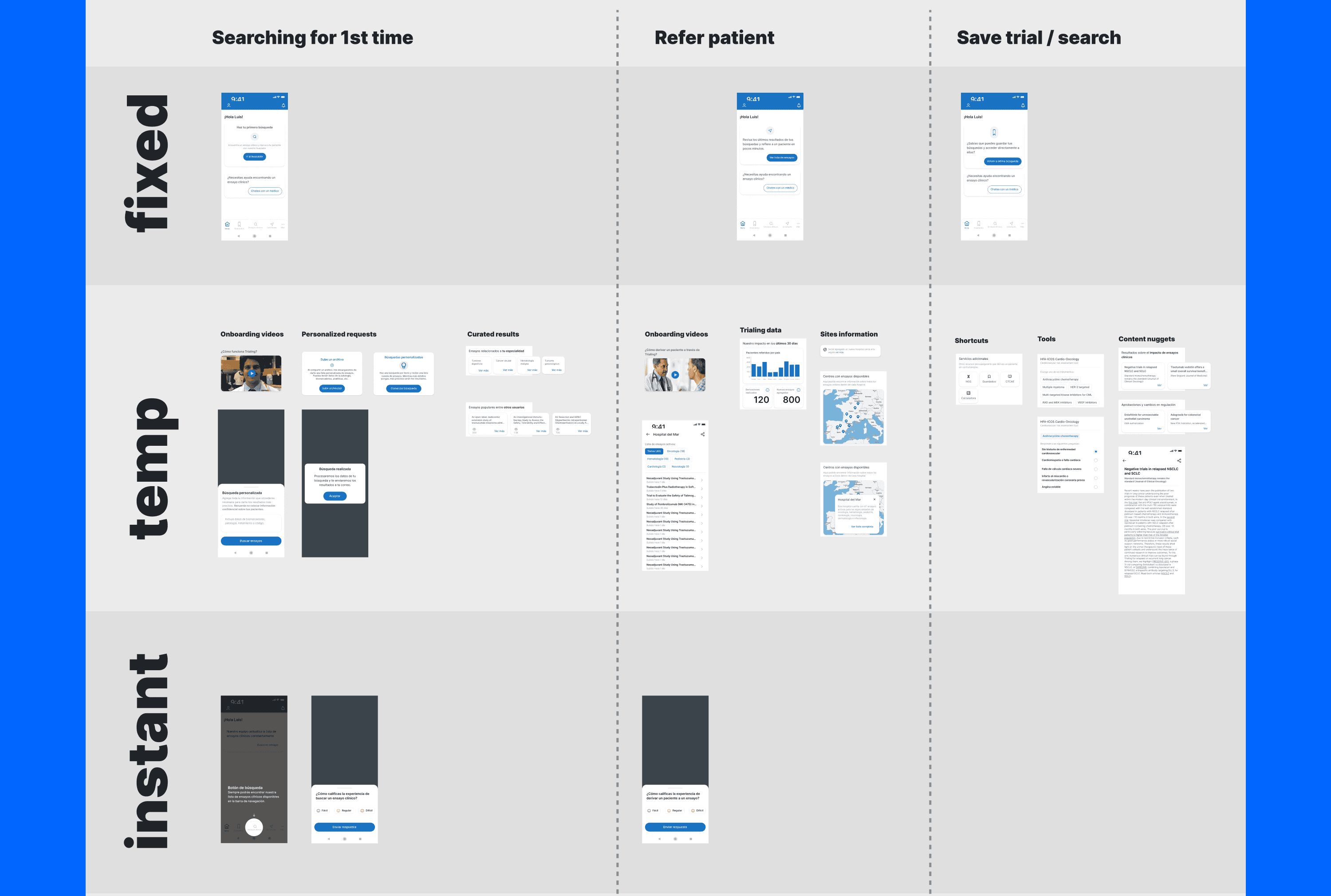
Since this is a live product with many features already in production, I dedicated time to mapping out all the app's flows, assessing improvement areas, and understanding current priorities with the CEO and Product Director. I facilitated workshops to get as many people involved in the process and start generating as many ideas as possible.
Outcome
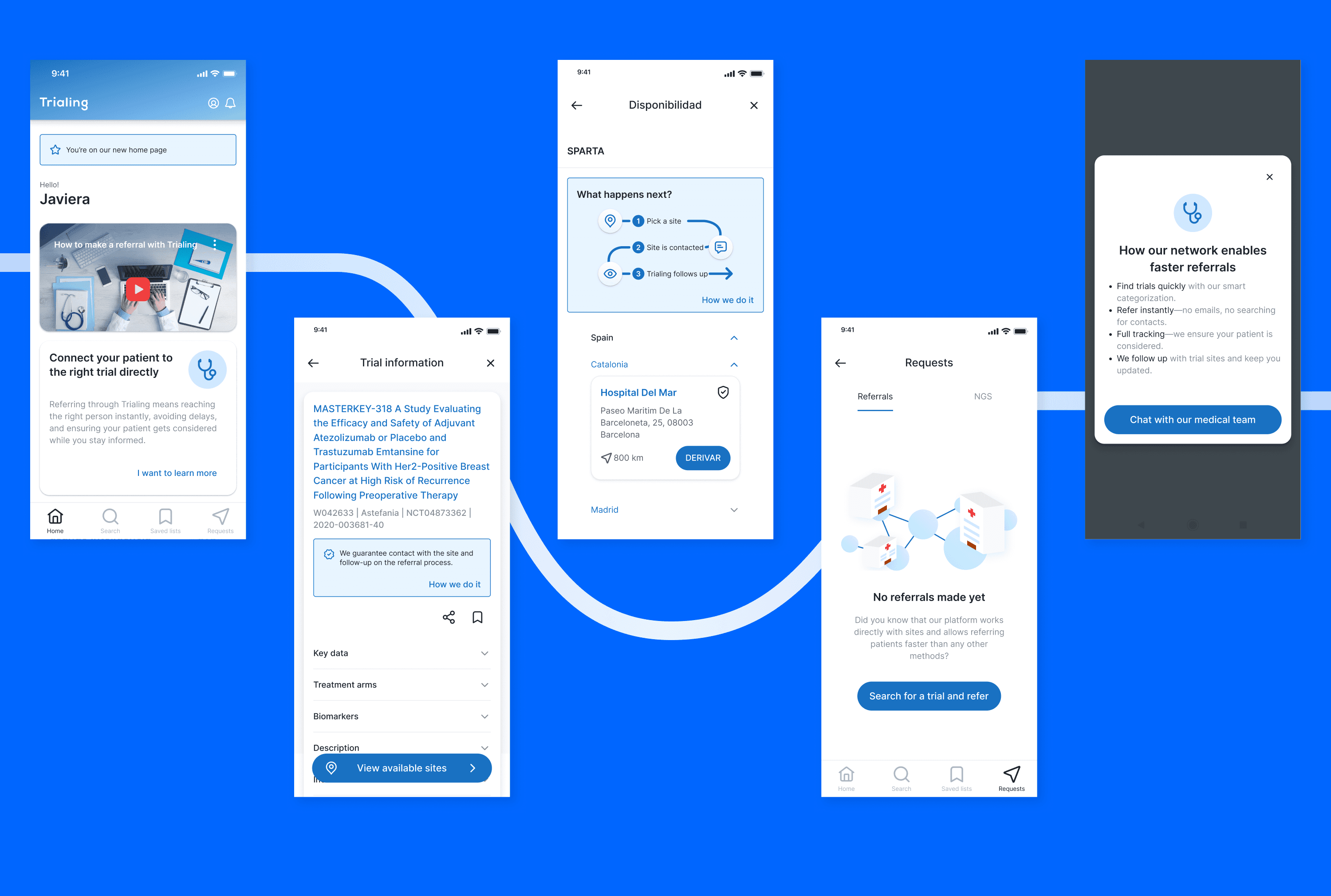
Our team aimed to build the essentials of each new feature or perform incremental upgrades to existing ones. By doing so, we wanted to make sure that we were testing our hypotheses and measuring user behaviors. I’ve worked on updating several features, including sign-up, trial search + referrals, as well as filters.
I’ve also designed the UI of an AI-powered tool that applies LLMs to filter out multiple criteria all at once.
Takeaways
When building an early-stage product, it’s important to fight the urge to design it for a generic audience and avoid encoding ‘what if’ scenarios in your UX and code. This will help everyone move faster and reengineer parts of a system.
There’s always a chance to simplify the scope of a user story while embedding good feedback mechanisms to gain certainty that a feature should be built in depth.
Documenting user behaviors systematically and early in the development of the product will allow for providing proactive and customized experiences (and help your users accomplish their goals faster).
© 2026 Enrique Peralta. All rights reserved.